NASA's Roman Space Telescope Arrives in Florida, Months Ahead of Schedule
The $4.3 billion Nancy Grace Roman Space Telescope reached Kennedy Space Center in June, targeting a Falcon Heavy launch no earlier than August 30.

NASA's next major observatory took a big step toward space in June 2026. The Nancy Grace Roman Space Telescope arrived at Kennedy Space Center in Florida on June 21, clearing the way for a launch now targeted for late summer, well ahead of its original timeline.
Quick answer
The roughly 18,000-pound Nancy Grace Roman Space Telescope reached Kennedy Space Center on June 21, 2026, about eight months ahead of schedule, and is targeting launch no earlier than August 30 on a SpaceX Falcon Heavy. Roman carries a Hubble-class mirror but a camera that captures an area of sky about 100 times larger per shot, making it a survey instrument built to study dark energy and find exoplanets. After launch it heads to the Sun-Earth L2 point, the same region where the James Webb Space Telescope operates.
Key takeaways
- The roughly 18,000-pound Roman telescope reached Kennedy Space Center on June 21, 2026, about eight months ahead of schedule.
- Launch is targeted no earlier than August 30, on a SpaceX Falcon Heavy from Launch Complex 39A.
- Roman carries a Hubble-class mirror but a camera that captures an area of sky about 100 times larger in a single shot.
- Its mission focuses on dark energy and exoplanets, with plans to reveal billions of galaxies and hundreds of thousands of new worlds.
- After launch it heads to the Sun-Earth L2 point, the same region where the James Webb Space Telescope operates.
What happened
NASA's Pegasus barge delivered the roughly 18,000-pound spacecraft to the Launch Complex 39 turn basin at Kennedy Space Center on June 21. The telescope had completed integration and testing at NASA's Goddard Space Flight Center in Maryland, then traveled by road to the port of Baltimore before sailing down the Atlantic coast to Florida inside an environmentally controlled transport container.
At Kennedy, the observatory enters roughly 70 days of prelaunch processing, the final checks, fueling, and integration steps before a spacecraft is ready to fly. NASA is targeting launch no earlier than August 30 aboard a SpaceX Falcon Heavy rocket from Launch Complex 39A. The agency noted the mission is running about eight months ahead of its committed schedule, a rarity for a flagship-class observatory.
Note
The Roman telescope is named for Nancy Grace Roman, NASA's first chief astronomer, often called the "Mother of Hubble" for her central role in making the Hubble Space Telescope happen.
Why it matters
Roman is a wide-field infrared observatory, and its defining feature is the size of its view. It carries a primary mirror similar in diameter to Hubble's, but its main camera can capture an area of sky roughly a hundred times larger in a single shot. In effect, it sees with Hubble-class sharpness across a far wider patch of the cosmos at once.
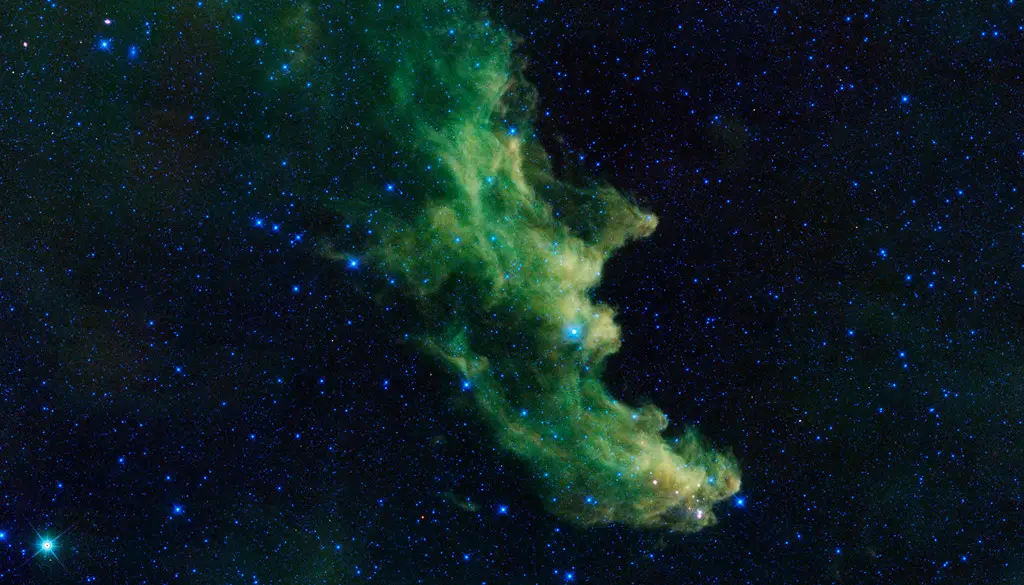
That wide view is built for survey science: scanning huge swaths of sky to study two of the biggest open questions in astronomy. Roman is designed to investigate dark energy, the mysterious force driving the universe's accelerating expansion, by mapping how cosmic structure has grown over billions of years. It will also hunt for new exoplanets, including many it can detect through microlensing, a technique sensitive to worlds other methods miss. NASA expects the mission to reveal billions of galaxies, hundreds of thousands of new exoplanets, and hundreds of black holes over its survey campaigns.
Being ahead of schedule and on budget is notable in its own right. Large space telescopes are famous for delays and cost overruns, so a flagship-class mission arriving early at the launch site is a genuinely positive story for NASA's science program.
How it fits with other telescopes
Roman is meant to complement, not replace, NASA's other great observatories. After launch it travels to the second Sun-Earth Lagrange point, or L2, the same gravitationally stable region where the James Webb Space Telescope operates about a million miles from Earth. Hubble offers detailed views of individual targets, and Webb probes deep into the infrared for the faintest, most distant objects. Roman's strength is breadth, surveying enormous regions quickly to find the interesting targets that the more narrowly focused telescopes can then examine in detail.
Here is how the three observatories divide the work:
| Telescope | Mirror size | Field of view | Specialty | Location |
|---|---|---|---|---|
| Hubble | 2.4 m | Narrow | Detailed visible/UV views | Low Earth orbit |
| James Webb | 6.5 m | Narrow | Faint, distant infrared | Sun-Earth L2 |
| Roman | 2.4 m | ~100x Hubble's | Wide infrared surveys | Sun-Earth L2 |
The complementary design is deliberate: Roman's surveys flag the billions of galaxies and hundreds of thousands of candidate worlds, and Hubble and Webb then zoom in on the most intriguing of them.
The mission also reflects how much modern science leans on processing vast data streams, a theme that runs through the wider tech landscape, from the AI memory crunch reshaping hardware to the data center buildouts funding next-generation compute. Roman alone is expected to generate enormous daily volumes of data for astronomers to analyze. That data deluge is part of why the mission's processing pipeline relies on automated transient detection: with a field of view this wide, no human team could manually sift the millions of objects each survey pass records, so the science depends on software flagging what changed between images.
The Falcon Heavy ride is its own milestone. Roman is one of the heaviest science payloads SpaceX's heavy-lift vehicle has carried to L2, and a successful launch further cements commercial rockets as the default ride for flagship NASA science, a role once reserved for purpose-built government launch systems.
Tip
"No earlier than" is standard NASA phrasing for a target date. Launches commonly slip for weather, technical checks, or range scheduling, so treat August 30 as the earliest plausible date rather than a fixed one.
What is next
Things to watch in the coming weeks:
- Prelaunch processing. The roughly 70-day campaign at Kennedy includes fueling and final integration onto the Falcon Heavy.
- The launch date. Watch for NASA to firm up or adjust the August 30 target as processing proceeds.
- First light. After launch, the telescope travels to L2 and goes through commissioning before science begins; early images come later.
- Survey rollout. Roman's biggest contributions come from its multi-year sky surveys, which build up over time rather than from a single headline image.
Frequently asked questions
When will Roman launch?
NASA is targeting no earlier than August 30, 2026, aboard a SpaceX Falcon Heavy from Kennedy Space Center. As standard, the date can slip for weather, technical, or scheduling reasons.
How is Roman different from Hubble and Webb?
Roman has a Hubble-class mirror but a vastly wider field of view, about 100 times larger per image, making it a survey instrument. Hubble and Webb specialize in deep, detailed views of individual targets, so Roman complements rather than replaces them.
What will Roman study?
Two headline goals: dark energy, by mapping how cosmic structure grew over billions of years, and exoplanets, including worlds found through microlensing. It is expected to reveal billions of galaxies and hundreds of thousands of new planets.
Why is it notable that the mission is early?
Flagship space telescopes are famous for delays and cost overruns. Roman arriving at the launch site about eight months ahead of schedule is unusual and a positive marker for NASA's science program.
For now, Roman's arrival in Florida marks the transition from years of construction and testing to the final stretch before flight, and a rare case of a flagship mission running ahead of plan.
Sources & further reading
- science.nasa.gov/blogs/roman/2026/06/21/nasas-next-generation-telescope-arrives-in-florida-ahead-of-launch/
- spaceflightnow.com/2026/06/22/nasas-nancy-grace-roman-space-telescope-arrives-in-florida/
- universetoday.com/articles/the-nancy-grace-roman-space-telescope-arrives-in-florida-ahead-of-launch
- en.wikipedia.org/wiki/Nancy_Grace_Roman_Space_Telescope
- space.com/space-exploration/launches-spacecraft/nasas-roman-space-telescope-arrives-in-florida-ahead-of-spacex-falcon-heavy-launch-this-summer