MCP Goes Stateless: What the 2026 Spec Means for Your Agents
The Model Context Protocol's 2026 release makes the core stateless and adds Tasks, MCP Apps, and auth hardening. Here's what changes for builders.

The Model Context Protocol (MCP) has gone from a niche Anthropic standard to genuine infrastructure: roughly 97 million monthly SDK downloads and more than 5,800 published servers. The 2026 specification, with its release candidate published on May 21 and final publication slated for July 28, 2026, is the biggest revision since launch, some people are already calling it "MCP 2.0."
Quick answer
The 2026 MCP spec makes the protocol core stateless: the handshake and session header are gone, so any server replica can handle any request and you no longer need sticky routing to scale horizontally. It also graduates Tasks to an extension for long-running async work, adds MCP Apps (SEP-1865) for sandboxed interactive HTML, aligns auth with OAuth 2.1 and OpenID Connect, and introduces a formal 12-month deprecation policy. The release candidate landed May 21, with final publication slated for July 28, 2026.
Key takeaways
- Stateless core. Any server replica can handle any request, so gateways and autoscalers work without sticky sessions or a shared session store.
- Tasks graduate to an extension. Long-running, asynchronous work gets a standard lifecycle (
tasks/get,tasks/update,tasks/cancel) reshaped around the stateless model. - MCP Apps (SEP-1865). Servers can return interactive HTML rendered in a sandboxed iframe, not just text.
- Auth aligns with OAuth 2.1 / OIDC. Six SEPs harden authorization, Protected Resource Metadata becomes mandatory, and clients declare their OpenID Connect
application_type. - A formal deprecation policy. Twelve months minimum between deprecation and removal, predictable change management for production systems.
What changed at a glance
Here are the headline changes, what each one is, and why it matters for builders:
| Change | What it is | Why it matters |
|---|---|---|
| Stateless core | No handshake or session header | Any replica serves any request; easy autoscaling |
| Tasks (extension) | Standard async lifecycle | Long jobs report progress and cancel cleanly |
| MCP Apps (SEP-1865) | Sandboxed interactive HTML | Tools return forms and charts, not just text |
| OAuth 2.1 / OIDC auth | Six SEPs, mandatory metadata | Plugs into standard identity providers |
| Deprecation policy (SEP-2596) | 12-month minimum sunset | Predictable change management |
| Cacheable discovery | Freshness metadata on lists | Cuts redundant tools/list traffic |
Why stateless matters
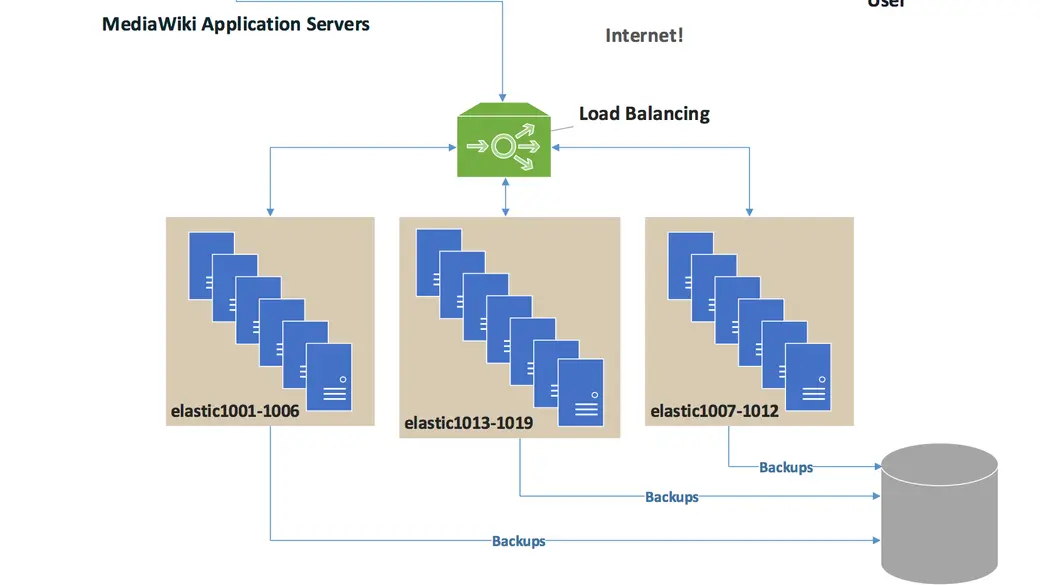
The original MCP assumed a long-lived session between client and server. That works on a laptop but fights how modern infrastructure scales. Stateful sessions pin a client to one server instance, complicate load balancing, and make horizontal scaling awkward.
The 2026 release removes that assumption. With a stateless core, a request carries everything the server needs to handle it, so a gateway can route any request to any replica. If you have ever wrestled with autoscaling an agent backend, this is the change you have been waiting for. The same context-engineering pressures that shape agent memory apply here: state has to live somewhere explicit, not be implied by a connection.
Smarter transport headers
The Streamable HTTP transport now surfaces the operation in request metadata, so infrastructure can route and throttle without parsing the JSON-RPC body:
POST /mcp HTTP/1.1
Mcp-Method: tools/call
Mcp-Name: search_invoices
Content-Type: application/json
Load balancers, gateways, and rate limiters can act on the operation at the edge. You can rate-limit tools/call differently from resources/read, or pin expensive tools to dedicated capacity, all without inspecting the payload.
Cacheable discovery
List and resource-read results can now advertise freshness metadata so clients know how long a tools/list response stays valid and whether it is safe to share across users. For a server exposing hundreds of tools, this cuts redundant discovery traffic dramatically.
Note
If you maintain a public MCP server, set conservative freshness windows on tool lists that rarely change. Clients can cache them instead of re-fetching on every connection, which lowers your load and speeds up every agent that talks to you.
New capabilities: Tasks and MCP Apps
Two additions expand what MCP can express.
Tasks give the protocol a first-class notion of long-running, asynchronous work. The feature shipped as an experimental core feature in the 2025-11-25 spec, but production use surfaced enough redesign that the right home turned out to be an extension rather than the core specification. Reshaped around the stateless model, a server can answer a tools/call with a task handle, and the client drives it with tasks/get, tasks/update, and tasks/cancel. Before this, a tool call that took minutes had to either block or invent its own polling scheme. Tasks standardize how a server reports progress and how a client checks on or cancels work in flight, essential for agents that kick off builds, deployments, or batch jobs.
MCP Apps (SEP-1865) push the protocol beyond plain text. Until early 2026, every MCP interaction was text in, text out. MCP Apps let a tool ship interactive HTML interfaces that the host renders inside a sandboxed iframe. Tools declare their UI templates ahead of time, so hosts can prefetch, cache, and security-review them before anything runs. A tool can hand back an interactive form or chart instead of a wall of JSON, while the sandbox keeps that markup from touching the host.
If you build tools that return structured data, it is worth pairing MCP Apps thinking with disciplined output schemas. The same instinct that drives Ollama structured outputs, make the machine-readable contract explicit, keeps a rich UI and the underlying data in sync.
Authorization hardening and governance
For enterprises, the missing piece was never capability; it was predictability. The 2026 spec ships six SEPs that align MCP with mainstream OAuth 2.1 and OpenID Connect deployments:
- MCP servers must implement OAuth 2.0 Protected Resource Metadata (RFC 9728), so clients can discover the correct authorization server automatically instead of guessing.
- Clients declare their OpenID Connect
application_typeduring Dynamic Client Registration (SEP-837). This avoids the common failure where an authorization server defaults a desktop or CLI client to "web" and then rejects itslocalhostredirect URI. - Issuer validation per RFC 9207 closes a class of mix-up attacks.
A worked example of the metadata a client now expects to discover:
{
  "resource": "https://mcp.example.com",
  "authorization_servers": ["https://auth.example.com"],
  "bearer_methods_supported": ["header"],
  "scopes_supported": ["mcp:tools", "mcp:resources"]
}
If your agents authenticate users, treat this surface with the same suspicion you would any other input boundary, the lessons from prompt injection defense apply: a tool result that arrives from an authenticated MCP server is still untrusted content as far as the model is concerned.
Crucially, the spec also ships a formal deprecation policy (SEP-2596): a minimum of 12 months between a feature's deprecation and its removal, with Standards Track changes tied to conformance-suite scenarios (SEP-2484) before they reach Final status. Three features are formally deprecated in this release, Roots, Sampling, and Logging, but the deprecations are annotation-only for now. The methods still work in this release and in every spec version published within a year of it; actually removing them will require a separate SEP.
Warning
A formal deprecation policy cuts both ways. Features can now be sunset on a published timeline. If you depend on Roots, Sampling, or Logging, read the SEPs and plan a migration, direct LLM provider calls replace Sampling, and OpenTelemetry or stderr replace Logging, rather than discovering the change in production.
The 2026 roadmap (published March 9, 2026) committed to four work areas, transport scalability, agent communication, governance maturation, and enterprise readiness, and the release candidate maps cleanly onto all four. Adoption numbers back the seriousness: surveys put roughly 41 to 45% of software cohorts in some form of production MCP deployment, strong for a protocol this young.
What to do now
If you build with MCP, here is a short checklist for the transition:
- Update SDKs and test your servers against the release candidate before July 28.
- Add
Mcp-MethodandMcp-Nameheader handling if you front your server with a gateway. - Audit any reliance on session state; move it to explicit per-request context.
- Advertise freshness metadata on your list and read responses.
- Explore the Tasks extension for anything that currently blocks for more than a few seconds.
- Implement Protected Resource Metadata if you expose an authenticated server.
Frequently asked questions
Does the stateless change break my existing MCP server?
Not immediately. Stateful behavior still works during the transition, and the deprecation policy guarantees at least 12 months before anything is removed. But new clients and infrastructure will assume the stateless model, so plan to migrate session-dependent logic to explicit per-request context rather than waiting.
Are Tasks and MCP Apps part of the core spec?
MCP Apps (SEP-1865) is a specification feature. Tasks, by contrast, moved out of the core and into an extension after production feedback during its experimental run. Both are governed by the same SEP process and conformance requirements, so treat the extension as a stable, supported surface, just versioned independently of the core.
What changes for authorization?
MCP now aligns with OAuth 2.1 and OpenID Connect. Servers must publish Protected Resource Metadata (RFC 9728) so clients can find the right authorization server, clients declare their application_type during registration, and issuer validation (RFC 9207) is required. If you already use a standards-compliant identity provider, most of this is configuration rather than custom code.
How is this different from how coding agents already use MCP?
Coding agents like Claude Code and Cursor consume MCP servers today over the existing transport, the 2026 changes affect how those servers scale and authenticate, not the day-to-day developer experience. If you are weighing tooling, our Claude Code vs Cursor comparison covers how each handles MCP connections.
The takeaway
The 2026 MCP spec is a maturation milestone. Statelessness, cacheable discovery, the Tasks extension, MCP Apps, OAuth-aligned authorization, and a real deprecation policy turn MCP from a clever local protocol into something you can scale and govern. The migration is not free, but the operational payoff, and the signal that MCP is here to stay, makes it worth the effort.
Sources & further reading
- blog.modelcontextprotocol.io/posts/2026-07-28-release-candidate/
- blog.modelcontextprotocol.io/posts/2026-mcp-roadmap/
- digitalapplied.com/blog/mcp-adoption-statistics-2026-model-context-protocol
- modelcontextprotocol.io/development/roadmap
- workos.com/blog/mcp-2026-spec-agent-authentication
- stacktr.ee/blog/mcp-2026-spec-changes