Giving Agents a Memory: Context Engineering Patterns for 2026
A context window is not memory. Here are the storage models and context-engineering patterns that let 2026 agents remember without blowing the token budget.

A language model's context window is not memory, it is working memory that vanishes the moment the conversation ends or the token budget fills. Building an agent that remembers across turns, sessions, and tasks is a systems problem, not a prompt. In 2026, the patterns for solving it have matured enough to treat as a proper discipline: context engineering, the practice of deciding exactly which tokens flow into the model and when.
Quick answer
Treat the context window like RAM and external stores like disk. Split memory into short-term (the active task, held in agent state) and long-term (facts and history, held in a vector DB or knowledge graph), then page the right tokens in on demand instead of dumping everything. In 2026 you configure this with a mature framework (Mem0 to bolt onto an existing stack, Letta for long-horizon autonomy, Zep for top retrieval accuracy) rather than hand-rolling it. Filter and compress at write time so the store holds signal, not transcripts.
Key takeaways
- A context window is RAM, not a hard drive. Durable memory lives in external storage and gets paged in on demand.
- Split memory into short-term (the active task) and long-term (facts that survive a session), and move data between them deliberately.
- Don't log everything. Selective storage and compression keep retrieval fast and reasoning sharp.
- Mature frameworks, Mem0, Letta, Zep, mean you configure memory in 2026 rather than build it from scratch.
- Learning loops like Agentic Context Engineering (ACE) let an agent improve without ever touching the model weights.
Two kinds of memory
Agent memory splits along the same lines as a computer's:
- Short-term memory lives inside the agent's state for the current multi-turn task, the recent conversation, intermediate results, the plan in progress. Frameworks like LangGraph hold this in the agent state and pass it forward through a run.
- Long-term memory persists across sessions, user preferences, past decisions, learned facts. It lives in external storage and gets pulled back into context only when relevant.
The whole game is moving the right information between these tiers without exceeding the context window or drowning the model in noise. That long-term store is almost always a vector database, which is why the pgvector vs Qdrant decision is really a memory-architecture decision in disguise.
There is a third category worth naming because teams keep rediscovering it the hard way: procedural memory, the agent's learned how-to knowledge. Where short-term memory holds the current conversation and long-term memory holds facts, procedural memory holds the playbooks, the "when a refund request comes in, check the order status first" rules that an agent accumulates. In 2026 the best systems separate these explicitly rather than dumping everything into one vector index, because facts and procedures have different retrieval patterns. You almost always want the same procedure available; you only want a fact when it is relevant to the question in front of you.
| Memory type | What it holds | Where it lives | Retrieved |
|---|---|---|---|
| Short-term (working) | Current task, recent turns, plan | Agent state / context window | Always present this run |
| Long-term (semantic) | User facts, past decisions | Vector DB or knowledge graph | On relevance |
| Procedural | Learned how-to rules, playbooks | Structured store or playbook file | On task type |
| Episodic | Records of past sessions | Archival store | On recall query |
The operating-system analogy
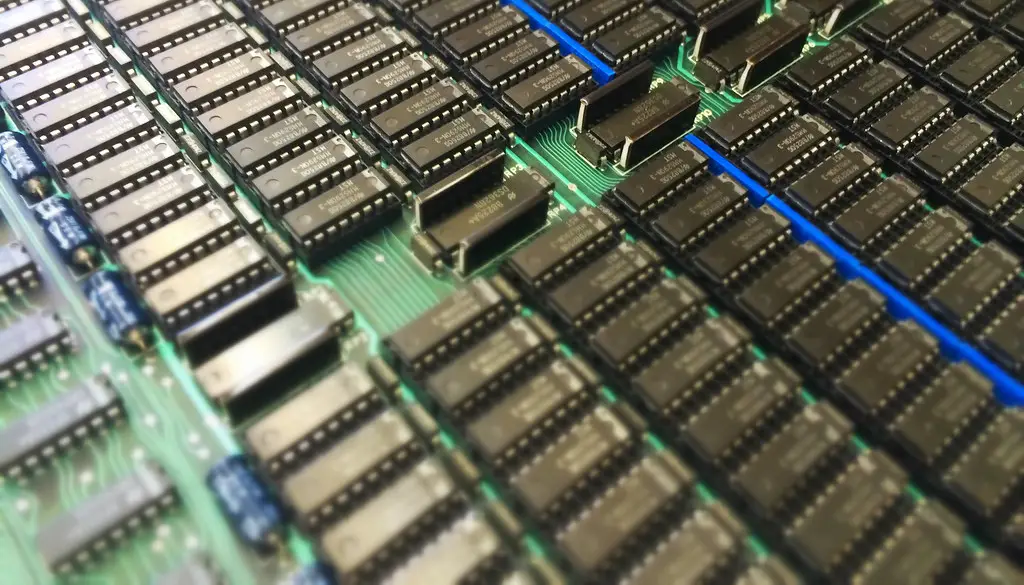
The most useful mental model in 2026 borrows directly from operating systems. The context window is RAM: fast, limited, expensive. External stores are disk: large, slower, cheap. Letta, the framework built directly on the MemGPT research paper, implements virtual context management that pages information between immediate context and long-term storage, exactly like an OS swapping memory pages. It splits memory into three tiers: core memory in the context window (RAM), and recall plus archival memory in external storage (disk).
The agent keeps a small working set in context and fetches from external memory on demand, then writes important new information back. This is what lets an agent handle a long-running task, days, weeks, even months, without ever holding the entire history in the prompt at once. When the window fills, a well-built system archives rather than truncates, so the agent degrades gracefully instead of forgetting the start of the task.
Pick a framework, don't roll your own
The memory layer is no longer something you hand-build. Three options dominate in 2026:
- Mem0 is framework-agnostic and the community favorite (~48K GitHub stars). You import the SDK, point your agent at it, and your existing LangChain, CrewAI, or custom loop gains persistent memory with no rearchitecting. Its integration docs now cover more than 20 frameworks across Python and TypeScript.
- Letta is a full runtime, your agent runs inside it. Choose it when coherent state across very long interactions is the core engineering problem.
- Zep leads on raw retrieval accuracy, reporting 63.8% on the LongMemEval benchmark versus Mem0's 49.0%, thanks to a temporal knowledge-graph backend.
Note
There is a real tradeoff here: Mem0 wins on adoption and ease of integration, Zep wins on benchmark accuracy, and Letta wins on long-horizon autonomy. Match the framework to your dominant constraint rather than chasing the highest leaderboard number.
Here is a quick decision table for the three dominant options:
| Framework | Best for | Backend | Standout claim |
|---|---|---|---|
| Mem0 | Bolting memory onto an existing stack | Vector + graph hybrid | ~48K GitHub stars, 20+ framework integrations |
| Letta | Long-horizon autonomous agents | Tiered virtual context (MemGPT) | Runs your agent inside its runtime |
| Zep | Maximum retrieval accuracy | Temporal knowledge graph | 63.8% on LongMemEval vs Mem0's 49.0% |
If you are already on Postgres and want to avoid adding infrastructure, you can run Mem0 against pgvector and skip a separate vector service entirely. That keeps your operational surface small, which matters more than a few benchmark points for most teams shipping their first memory-backed agent.
Don't store everything
The naive approach, log every message and retrieve from the pile, bloats storage, slows retrieval, and buries signal in noise. The 2026 answer is selective storage: intelligent filtering and compression that preserve high-value information and discard redundant data. The agent keeps a manageable footprint while retaining what matters.
Compression is doing real work here. Active Context Compression has reported a 22.7% token reduction while holding accuracy steady. Fewer tokens in context means lower cost, lower latency, and less chance of the model losing the thread in a wall of history. That cost discipline is part of a broader shift covered in the end of tokenmaxxing, teams now treat every token in the window as a line item.
Tip
Before you store a turn, ask whether it changes future behavior. "User prefers metric units" is worth remembering forever. "User said thanks" is not. A cheap filter at write time saves expensive retrieval and context bloat at read time.
Agentic Context Engineering
One of the more interesting 2026 patterns is Agentic Context Engineering (ACE), published at ICLR 2026, a three-agent loop that lets an agent improve without fine-tuning the underlying model:
- A Generator produces an initial response.
- A Reflector evaluates and refines it.
- A Curator extracts the lessons and updates a persistent "context playbook."
Over time the playbook accumulates hard-won knowledge the agent consults on future tasks. The reported gains are substantial: roughly +10.6% on the AppWorld agent benchmark and +8.6% on XBRL-based financial reasoning, all without touching the model weights. Just as striking, adaptation latency dropped by about 86.9% and token cost on the finance tasks fell by 83.6% versus prior adaptive methods. The intelligence comes from the memory architecture, not a bigger model.
A minimal version of the loop looks like this:
def ace_step(task, playbook, model):
    draft = model.generate(task, context=playbook)          # Generator
    critique = model.reflect(task, draft)                   # Reflector
    lesson = model.extract_lesson(critique)                 # Curator
    if lesson.is_useful:
        playbook.append(lesson)                             # persist, no fine-tune
    return draft, playbook
A practical blueprint
To give your agent durable memory without runaway cost:
- Separate the tiers. Short-term state for the active task, external long-term store for persistence.
- Page, don't dump. Retrieve only what is relevant to the current step; write back only what is worth keeping.
- Filter at write time. Use selective storage so the long-term store holds signal, not transcripts.
- Compress. Summarize old context rather than carrying it verbatim.
- Consider a learning loop. A generate-reflect-curate pattern like ACE lets the agent get better at recurring tasks over time.
Warning
More context is not better context. Stuffing the window with everything you stored degrades reasoning and raises cost, the model loses focus in the noise. Retrieval precision beats retrieval volume every time. Tune for relevance, not recall.
What to do right now
If you are about to add memory to an agent, work through this in order rather than reaching for the biggest framework first:
- Pick a framework instead of hand-rolling: Mem0 to bolt onto an existing stack, Letta for long-horizon autonomy, Zep when retrieval accuracy is the whole ballgame.
- Separate short-term state from the long-term store on day one, retrofitting that split later is painful.
- Add a write-time filter so only behavior-changing facts get persisted, not every "thanks."
- Set a hard token budget for retrieved context and measure how much you actually inject per turn.
- Summarize or compress old context rather than carrying transcripts verbatim; aim for the signal, drop the chatter.
- Once the basics work, consider a generate-reflect-curate loop like ACE so the agent improves on recurring tasks without fine-tuning.
Frequently asked questions
Is a bigger context window a substitute for memory?
No. Even million-token windows are slower and pricier to fill, and models still suffer "lost in the middle" degradation when the window is stuffed. A large window helps short-term working memory; it does nothing for persistence across sessions, which still requires external storage.
Do I need a vector database for agent memory?
Usually yes for semantic recall, though not always alone. Most stacks combine a vector store for similarity search with structured storage (or a knowledge graph, as Zep uses) for facts and relationships. If you already run Postgres, pgvector is the path of least resistance.
How is context engineering different from prompt engineering?
Prompt engineering shapes a single instruction. Context engineering governs the entire information flow into the model across a run, what gets retrieved, compressed, cached, and written back. It is a systems discipline, not a wording exercise.
Can ACE-style learning replace fine-tuning?
For many tasks, yes. ACE's gains come entirely from an evolving context playbook, with no weight updates, which makes it cheaper and faster to iterate than fine-tuning. Fine-tuning still wins when you need to change the model's baseline behavior or style at a deep level.
The takeaway
Memory is where agents stop being stateless chatbots and start being useful collaborators. The 2026 playbook is clear: treat the context window like RAM and external stores like disk, page information between them intelligently, filter and compress aggressively so you keep signal over noise, and consider a learning loop so the agent improves with use. The capability gain often comes not from a bigger model but from better context engineering around the one you already have.
Sources & further reading
- machinelearningmastery.com/the-6-best-ai-agent-memory-frameworks-you-should-try-in-2026/
- indium.tech/blog/agent-memory-models-long-context-reasoning-2026/
- 47billion.com/blog/ai-agent-memory-types-implementation-best-practices/
- mem0.ai/blog/state-of-ai-agent-memory-2026
- vectorize.io/articles/mem0-vs-letta
- arxiv.org/abs/2510.04618
- docs.letta.com/concepts/memgpt
- github.com/mem0ai/mem0